Pumping method guide · Updated August 20, 2026

Air vs water penis pumps

Water pumping is a good choice if a warm bath or shower session is the experience you want. For consistency, lower effort and a more relaxed dry session, an automatic air pump is usually the better fit: there is no filling or draining, the motor performs the pumping, and documented settings or patterns can be repeated. That advantage comes from automatic control—not from air alone.

Published: August 20, 2026 Sources: FDA, clinical guidance and PubMed-indexed reviews Reading time: 10–12 minutes
Automatic air pump with separate controller and cylinder Air pumping
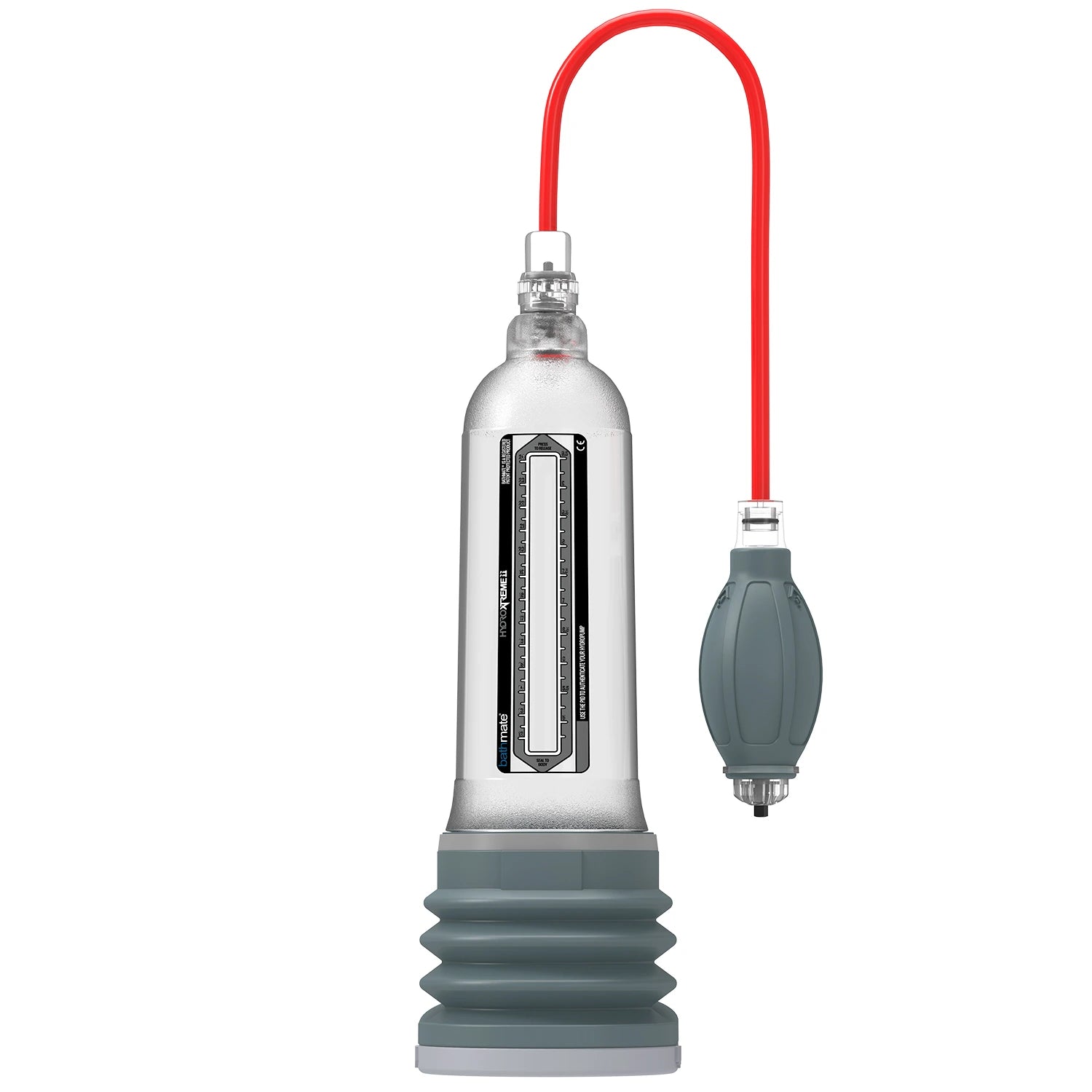
Manual water-based penis pump Water pumping
Best for repeatable sessionsAutomatic air is easier to use consistently

The motor handles the pumping, while dry setup and documented patterns reduce the work required each session.

Good for water-based comfortWater suits bath or shower use

A purpose-built hydropump can feel comfortable and familiar when water is already part of your preferred session.

More important than mediumFit, release and pressure control

A reliable seal, understandable control and immediate pressure release matter with either method.

The short answer

Water is good for comfort; automatic air is better for consistency

Which is better: an air or water penis pump?Water is a good choice for people who enjoy a bath or shower workflow. For consistent, lower-effort and more relaxed sessions, an automatic air pump is usually better because it requires no filling or draining and the motor can repeat documented settings or patterns. This is a usability advantage—not proof that air produces a superior medical outcome.

An air pump removes air from a sealed cylinder. A water pump, often called a hydropump, uses water inside the cylinder and expels some of that water to create negative pressure. Both approaches rely on a pressure difference between the cylinder and the surrounding environment.

The words air and water do not tell you whether a pump is manual or automatic. Those are separate design choices. A water pump is commonly manual, while an air pump may be manual or motorized. The consistency benefit discussed here applies specifically to an automatic air system, not every air pump.

Side-by-side

Air pump vs water pump comparison

The most useful differences appear before and after suction: where the session happens, what has to be prepared, how pressure is monitored, and how the device is cleaned.

Detailed comparison of air and water penis pumps
Decision pointWater pumpAir pump
Vacuum mediumWater fills most or all of the cylinder before water is expelled.Air is removed from a dry or lubricated sealed cylinder.
Session consistencyCommon water pumps require the user to repeat the pumping technique, pace and timing.An automatic air system can repeat documented settings or patterns with less hand effort and user variation.
Relaxed useFilling, manual pumping, draining and drying keep the session more hands-on.After setup, a motorized system performs the pumping and keeps the controls accessible.
Typical locationOften designed around a bath or shower.Can usually be used in a dry private space; follow the specific instructions.
SetupFill the cylinder, establish the seal and manage displaced water.Inspect the dry system, connect any hose or controller, lubricate as directed and establish the seal.
CleanupDrain, rinse as instructed and dry completely before storage.Clean body-contact components as instructed; no cylinder water has to be drained.
TravelUse depends on access to water and a suitable private space.Generally simpler away from a bathroom, although powered models also need battery planning.
Pressure feedbackVaries. Some water pumps do not display a pressure number.May use tactile feedback, an analog gauge or a digital display, depending on the model.
AutomationCommonly manual, so the user creates each pressure change; check the official instructions.Available as manual, electric, automatic and app-connected designs. Automatic models reduce repeated hand work.
TemperatureWater temperature becomes part of the setup; avoid temperatures outside the manufacturer’s instructions.Does not require warm water, though the room and device should still be comfortable to use.
ElectronicsDo not combine water with electronics unless the complete product is expressly designed and rated for it.Powered controllers stay dry unless the manufacturer explicitly documents water resistance.
What determines safetyCorrect fit, gradual control, an immediate pressure release, intact seals and following the device manual—not the medium alone.

Real-world tradeoffs

Where each pumping method makes sense

Why water pumping is still a good choice

Water can be enjoyable and comfortable for people who deliberately want a bath or shower ritual. It is not a bad method; it simply requires more setup and is commonly more hands-on.

  • You already prefer a bath or shower session.
  • You like a water-filled cylinder and the way that workflow feels.
  • You do not mind filling, draining, rinsing and drying the device.
  • You are choosing a pump explicitly engineered for water use.

Why automatic air is better for consistency

Automatic air removes water preparation and repetitive hand pumping, making it easier to relax and repeat the same plan.

  • The motor performs the pumping instead of requiring repeated hand action.
  • Documented settings or patterns can make sessions easier to repeat.
  • Dry use offers more privacy and does not depend on a bath or shower.
  • Quicker setup and cleanup can make a planned schedule easier to follow.

Why pressure can feel different

Water and air move differently when a seal shifts or when pressure changes. That can change the sensation and speed of a session, but a subjective feeling is not a measurement of therapeutic superiority. Pressure feedback, the control mechanism and the user’s anatomy also affect how a pump feels.

Do not improvise between methods

Never add water to an air-only device, hose or controller. Never assume an electronic pump is waterproof. Use only the medium, components, cleaning process and environment listed in that model’s current instructions.

Decision guide

Choose water for the experience; choose automatic air for consistency

Best overall for consistencyAn automatic air pump is usually the better fit because it reduces manual variation and can repeat documented settings or patterns.
More relaxed, lower-effort sessionAutomatic air lets the motor perform the active pumping after setup, reducing repetitive hand work.
Quick, dry setupAir is generally the better fit because no water-filled cylinder has to be prepared or drained.
Water-based comfortA purpose-built water pump is a good choice when a warm bath or shower is part of the experience you prefer.
Visible pressure informationLook for the actual gauge or display specification. Air systems offer more choices, but not every air pump measures or displays pressure.
Automatic operationLook primarily among motorized air pumps. “Air” alone does not mean automatic, and “water” alone does not mean manual.
TravelAir usually reduces dependence on bathroom setup. Also compare battery life, charger type, cylinder size and discretion.
ED or post-surgery useChoose with a clinician. Intended use, fit, pressure release and the prescribed protocol matter more than air versus water.

Clinical evidence

What published research supports—and what it does not

Research supports VEDs as a category

A 2025 systematic review and meta-analysis pooled 18 studies involving 1,065 patients with refractory erectile dysfunction and reported an 80% pooled efficacy estimate. The most common reported adverse effect was bruising. These results concern vacuum erection devices generally; they do not prove that water is better than air or air is better than water. Read the PubMed abstract (PMID 40542251).

18Studies included in the refractory-ED meta-analysis
1,065Patients represented across those studies
80%Pooled efficacy estimate for VED use in that specific population

A separate 2025 systematic review found that VED therapy improved erectile-function scores compared with no intervention and that combination treatment could outperform PDE5-inhibitor therapy alone in the included studies. Again, the analysis evaluated VED therapy, not air versus water. Read the PubMed abstract (PMID 41147931).

Consistency matters because VED use is use-dependent

A 2024 scoping review reported that VED results appeared to improve when patients entered dedicated programs designed to increase compliance. A separate two-year study found that VED use declined over time and identified inconvenience and perceived ineffectiveness among the main adherence barriers. Together, those findings support choosing a device you can use consistently. They do not prove that air itself or an automatic motor produces a better medical outcome. Read the scoping review (PMID 37085734) and the adherence study (PMID 31590638).

The evidence gap matters

The clinical reviews located for this guide do not establish that the fluid inside a consumer pump determines better ED outcomes. Claims that water pumping is inherently more effective, produces permanent enlargement or is automatically safer go beyond the category-level evidence reviewed here.

The FDA’s device guidance describes vacuum systems as using either a hand-operated or motorized pump and identifies pressure-release or vacuum-limiting safeguards as important design features. Read the FDA guidance.

Safety checklist

Questions to answer before choosing any pump

Does the cylinder fit?An incorrect diameter or poor seal can make control difficult and can change comfort.
Can pressure be released immediately?You should be able to reach and understand the release without depending on a phone connection.
What feedback is visible?Look for documented levels, an analog gauge or a pressure display rather than assuming the label tells you.
What is the intended use?A wellness pump and a VED kit intended to support an erection for intercourse may include different instructions and components.
Is a constriction ring involved?Use only compatible rings and follow the device’s time limits. Rehabilitation sessions and intercourse-support use are not the same protocol.
Should a clinician be involved?Ask before use if you take anticoagulants, have a bleeding disorder, reduced genital sensation, significant curvature, a history of priapism, recent pelvic surgery or another relevant condition.

Medical note

This guide is educational, not a diagnosis or personal treatment protocol. New or worsening erectile dysfunction can be associated with cardiovascular, metabolic, neurologic, medication-related or psychological causes and deserves appropriate medical evaluation.

Common questions

Frequently asked questions

Is a water penis pump better than an air pump?

Water is a good choice for bath or shower comfort. For consistency and relaxed, lower-effort use, an automatic air pump is usually better because dry setup removes filling and draining, while the motor can repeat documented settings or patterns. That is a usability advantage, not proof that air has a superior medical effect.

Is water pumping safer than air pumping?

The medium alone does not establish safety. Correct sizing, gradual control, an immediate pressure release, intact seals, appropriate session limits and following the current manual matter with both methods.

Can I put water in an air pump?

Only if the manufacturer explicitly says the complete model supports water use. Water can damage a pump, hose, gauge, motor or electronics that were designed to stay dry.

Does warm water make a penis pump more effective?

Warmth may change comfort or subjective session feel, but that is not proof of better ED outcomes or permanent enlargement. Follow the water-temperature range in the product instructions and avoid water hot enough to injure skin.

Is a hydropump the same as a water pump?

Usually yes. “Hydropump” is a common name for a penis pump designed to use water inside the cylinder. Check the individual manual because construction and operating steps still vary.

Are all air pumps automatic?

No. Air describes the medium. An air pump can use a manual bulb, a hand lever, a battery-powered motor or an app-connected controller. The consistency and lower-effort advantage discussed on this page applies to automatic air systems. Read our manual vs automatic pump guide for the separate power-source decision.

Which method is better after prostate surgery?

The treating surgeon or urologist should choose the timing and protocol. Published rehabilitation research evaluates VED use broadly and does not establish air or water as the superior medium. See the VED after prostatectomy evidence guide.

Does water pumping cause permanent penis enlargement?

Vacuum can produce temporary engorgement while blood is drawn into the penis. The clinical evidence reviewed for this page does not establish permanent enlargement from choosing water rather than air.

Sources and methodology

How this guide was prepared

SmartTract reviewed current clinical summaries and regulatory guidance for the vacuum erection device category, then separated category-level evidence from product-design differences. Product features vary and should be verified in current manufacturer instructions. SmartTract manufactures an automatic air pump; this guide does not claim hands-on testing of every pump or clinical superiority for SmartTract Go.

References

  1. Zhang F, et al. Efficacy of vacuum erectile device in refractory erectile dysfunction: a systematic review and meta-analysis. Int J Impot Res. 2026;38(2):76–85. PubMed PMID 40542251.
  2. Theodorus AR, et al. Is the vacuum erectile device suitable for treating erectile dysfunction? A systematic review and meta-analysis exploring the evidence gap. Arch Ital Urol Androl. 2025;97(4):14328. PubMed PMID 41147931.
  3. Guillot-Tantay C, et al. Vacuum erection devices in the management of erectile dysfunction: a systematic review. Fr J Urol. 2026;36(6–7):103134. PubMed PMID 42217797.
  4. Vacuum erectile devices for erectile dysfunction: recommendations from the 5th International Consultation on Sexual Medicine. Sex Med Rev. 2025. PubMed PMID 39957431.
  5. Pirola GM, et al. Vacuum erection device for erectile function rehabilitation after radical prostatectomy: which is the correct schedule? Results from a systematic, scoping review. Int J Impot Res. 2024;36(3):194–200. PubMed PMID 37085734.
  6. Adherence and barriers to penile rehabilitation over 2 years following radical prostatectomy. J Sex Med. 2019. PubMed PMID 31590638.
  7. U.S. Food and Drug Administration. External Penile Rigidity Devices: Class II Special Controls Guidance. FDA guidance.
  8. European Association of Urology. Sexual and Reproductive Health Guideline: Management of Erectile Dysfunction. EAU guideline.

Last evidence search: August 20, 2026. This page is educational and does not replace the instructions for a specific device or advice from a qualified healthcare professional.